The New Frontier: Why Autonomous AI CRM Agents Are the End of Business as We Know It

The landscape of Customer Relationship Management (CRM) is undergoing a tectonic shift. For decades, businesses have treated the CRM as little more than a digital filing cabinet—a place to store names, phone numbers, and the occasional notes from a sales call. Even with the introduction of automation, these systems remained reactive, waiting for a human to trigger a workflow or click a button. However, we have entered the era of the Autonomous AI CRM Agent. These are not just smarter chatbots; they are digital teammates capable of reasoning, decision-making, and proactive execution.
From Automation to Autonomy
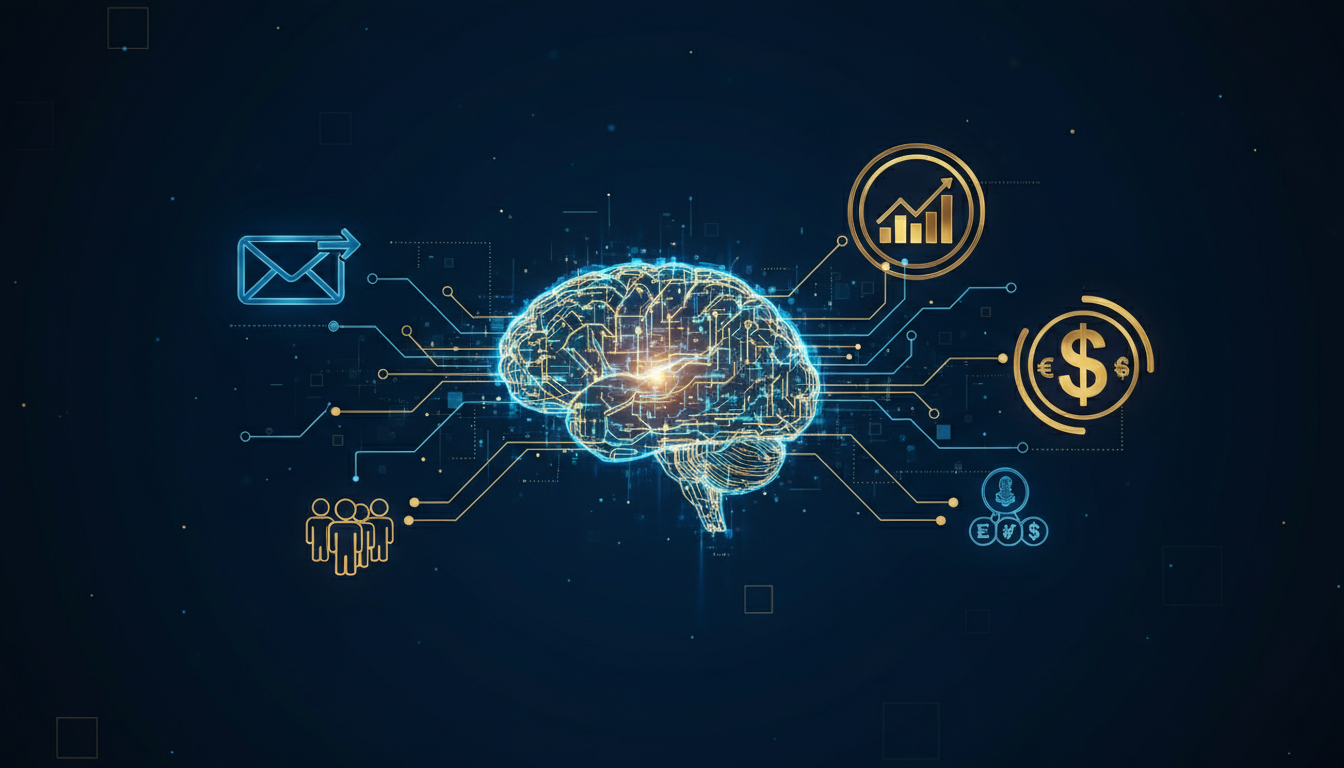



To understand the significance of this shift, we must distinguish between automation and autonomy. Standard CRM automation is linear. If a customer fills out a form, the system sends a templated email. It is efficient, but it is rigid. Autonomous AI agents, on the other hand, operate on intent and goals. They utilize Large Language Models (LLMs) to interpret context, meaning they don’t just follow a script—they understand the situation.
An autonomous agent can scan a CRM, identify a lead that hasn’t been contacted in three months, research that lead’s company on LinkedIn, find a recent piece of news relevant to their industry, and craft a highly personalized outreach message. It does all of this without a human manager ever having to tell it to ‘start.’ This transition from ‘if-this-then-that’ logic to ‘goal-oriented reasoning’ is what defines the next generation of business software.
[IMAGE_PROMPT: A futuristic digital workspace showing a glowing holographic neural network interfacing with a sophisticated CRM dashboard, featuring data visualizations and sleek UI elements in a professional corporate setting, cinematic lighting, 8k resolution.]
The Core Capabilities of Autonomous Agents
What makes an AI agent truly autonomous within a CRM? It boils down to three core pillars: Perception, Reasoning, and Action.
1. Perception: The agent constantly monitors data streams. This includes incoming emails, customer support tickets, social media mentions, and internal sales data. Unlike humans, who might miss a subtle change in a customer’s tone, an AI agent can detect ‘churn signals’—the specific language patterns that suggest a client is unhappy—long before they cancel their subscription.
2. Reasoning: Once an agent perceives a change, it evaluates its options. If a high-value client expresses frustration, the agent doesn’t just send a generic apology. It analyzes the client’s history, checks current inventory or service status, and determines whether it should offer a discount, schedule a call with an executive, or solve the problem directly.
3. Action: This is where the magic happens. Autonomous agents have ‘tools’—they can write and send emails, update CRM records, create calendar invites, or even trigger billing adjustments. They function as an invisible layer of labor that never sleeps, ensuring that no lead goes cold and no customer feels ignored.
The Impact on Sales and Marketing Funnels
In the traditional sales funnel, human agents spend nearly 60% of their time on administrative tasks: data entry, lead scoring, and follow-ups. Autonomous CRM agents flip this ratio. By handling the ‘top of the funnel’—qualifying leads through natural conversation and nurturing them until they are ready to buy—these agents allow human sales reps to focus exclusively on closing high-value deals.
Imagine a marketing campaign where every single recipient receives a different follow-up based on their specific interaction with the initial content. An autonomous agent can manage thousands of these individual relationships simultaneously, providing a level of hyper-personalization that was previously impossible to scale.
[IMAGE_PROMPT: A professional business environment where a diverse group of analysts is collaborating around a large, transparent touch-screen table showing interconnected nodes of customer journeys and AI-driven growth metrics, bright and airy office background.]
The Technical Architecture: LLMs and RAG
The brain of these agents is typically a Large Language Model (LLM) like GPT-4 or Claude, but the ‘memory’ is powered by Retrieval-Augmented Generation (RAG). By connecting an LLM to a company’s private data—its product manuals, pricing sheets, and past communication logs—the AI agent can provide answers that are not only grammatically correct but also factually accurate and contextually relevant to the business.
Furthermore, these agents are increasingly being built with ‘Long-Term Memory.’ This means the agent remembers that a particular client prefers short emails or that they mentioned a vacation in Italy six months ago. When the agent reaches out again, it can reference those details, building rapport in a way that feels surprisingly human.
Navigating the Challenges: Trust and Ethics
Of course, handing over the ‘keys’ to your customer relationships to an AI isn’t without risks. There are valid concerns regarding data privacy, AI ‘hallucinations’ (where the AI makes up facts), and the potential for a loss of the ‘human touch.’
To mitigate these, savvy organizations are implementing ‘Human-in-the-Loop’ (HITL) frameworks. In this model, the AI agent does the heavy lifting—researching, drafting, and organizing—but a human supervisor provides the final approval for high-stakes interactions. As the AI proves its reliability over time, the ‘leash’ can be lengthened, allowing for greater autonomy.
Security is also paramount. Businesses must ensure that autonomous agents operate within strict guardrails, preventing them from accessing sensitive financial data or making unauthorized promises to customers. SOC2 compliance and robust encryption are no longer optional; they are the foundation of trust in the AI era.
Conclusion: The Future is Proactive
We are moving away from an era of ‘Software as a Tool’ toward ‘Software as a Service’ in the most literal sense. Autonomous AI CRM agents represent a paradigm shift where the software doesn’t wait for us to tell it what to do. Instead, it looks at the business goals—increase revenue, decrease churn, improve satisfaction—and finds the best path to achieve them.
For companies that embrace this technology, the rewards are immense: lower operational costs, higher conversion rates, and a customer experience that feels proactive rather than reactive. The question is no longer whether AI will manage our customer relationships, but how quickly we can learn to work alongside these new digital colleagues. The future of business isn’t just automated; it’s autonomous.