Predictive Churn Analysis: How CRMs Are Now Reading Your Customers’ Minds

In the fast-paced world of modern business, losing a customer is often compared to a leaky bucket. You can pour as much marketing budget as you want into the top to acquire new leads, but if there is a hole at the bottom, your growth will eventually stall. This phenomenon is known as ‘churn,’ and for a long time, it was something businesses only reacted to after the customer had already left. However, the marriage of Customer Relationship Management (CRM) systems and predictive analytics has changed the game entirely. We are no longer just looking at the past; we are peering into the future.
The Silent Business Killer
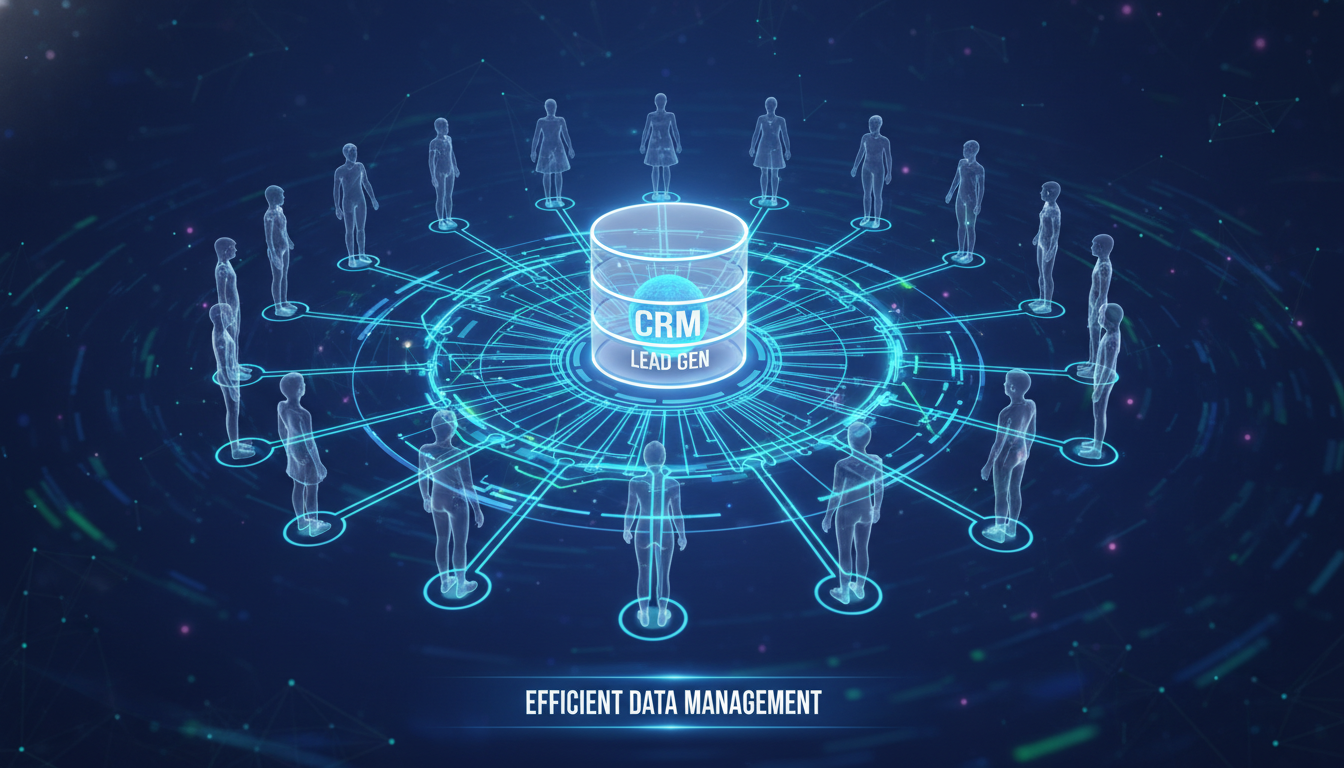
Churn is the silent killer of profitability. It is a well-documented fact in business school that acquiring a new customer can cost five to twenty-five times more than retaining an existing one. Despite this, many companies still focus heavily on the ‘top of the funnel.’ Predictive churn analysis shifts that focus. By utilizing historical data stored within a CRM, businesses can identify which customers are likely to cancel their subscriptions or stop buying products before it actually happens. This isn’t magic; it is high-level data science made accessible through modern software.
[IMAGE_PROMPT: A high-tech digital dashboard displaying predictive analytics, showing a ‘Churn Risk’ meter for different customer segments with glowing blue and orange data visualizations on a dark background.]
How It Works: From Data to Insight
At its core, predictive churn analysis uses machine learning algorithms to scan thousands of data points. Your CRM is a goldmine for this. It tracks every interaction: how often a customer logs in, the sentiment of their last support ticket, their payment history, and even how they interact with your marketing emails.
When these data points are fed into a predictive model—such as a Random Forest, Logistic Regression, or XGBoost model—the system looks for patterns. For instance, the model might discover that customers who haven’t logged into their portal for 10 days and have filed two support tickets in the last month have an 85% probability of churning.
The Key Indicators of Churn
While every industry is different, there are several universal ‘red flags’ that predictive CRM models monitor:
1. Decreased Usage Frequency: If a once-active user suddenly drops their engagement levels, it is a primary indicator of waning interest or dissatisfaction.
2. Support Ticket Trends: It’s not just the number of tickets, but the sentiment. A customer who sounds frustrated in their messages is at a much higher risk than one asking a simple technical question.
3. Billing Issues: Repeated failed credit card transactions or frequent requests for credits/refunds often precede a total cancellation.
4. Competitive Benchmarking: Advanced models can even track if a customer is engaging with content related to your competitors.
Turning Insights into Proactive Action
Predictive analysis is useless if it doesn’t lead to action. The true power of a modern CRM lies in its ability to automate the ‘save’ process. Once a customer is flagged as high-risk, the CRM can trigger a workflow. This might involve alerting a dedicated Account Manager to reach out personally, or automatically sending a personalized ‘we miss you’ offer with a significant discount or a free training session.
[IMAGE_PROMPT: A professional customer success manager sitting at a desk, looking at a computer screen that displays a ‘High Churn Risk’ alert, with a friendly and proactive posture, stylized in a clean modern office environment.]
The Human Element in a Machine-Driven World
One might think that relying on algorithms makes customer service feel cold and robotic. Paradoxically, it does the opposite. By letting the AI handle the data crunching and risk identification, human teams are freed up to do what they do best: build relationships. Instead of calling every customer at random, success teams can focus their energy on the individuals who actually need help. It allows for a ‘formal’ strategy executed with a ‘relaxed’ and personal touch.
For example, instead of a generic mass email, a customer service representative can say, ‘Hi Sarah, I noticed you haven’t been able to utilize the advanced reporting features lately. Would you like a 15-minute walkthrough to help you get the most out of it?’ This doesn’t feel like a sales pitch; it feels like genuine support.
The Technical Hurdles
Implementation isn’t without its challenges. The biggest obstacle is usually ‘Dirty Data.’ If your CRM is filled with duplicate entries, missing contact info, or disconnected silos (where the sales data doesn’t talk to the support data), your predictive model will be inaccurate. As the saying goes, ‘Garbage in, garbage out.’
Furthermore, businesses must navigate the ethics of data privacy. With regulations like GDPR and CCPA, it is crucial that the way you collect and analyze customer behavior remains transparent and compliant. Predictive analysis should be used to enhance the customer experience, not to exploit it.
Conclusion: The Future of Retention
We are moving toward a ‘Zero Churn’ ideal. While impossible to reach perfectly, the integration of predictive analytics into CRM platforms brings us closer than ever. In the next few years, we will likely see these models become even more sophisticated, incorporating voice-to-text sentiment analysis from phone calls and even predicting churn based on macroeconomic trends.
For businesses looking to thrive in a subscription-based economy, predictive churn analysis is no longer a luxury; it is a necessity. It turns the ‘silent killer’ into a loud, clear signal—an opportunity to save a relationship and turn a frustrated user into a loyal brand advocate. Don’t wait for the exit interview to find out what went wrong. Use your data to keep the conversation going before it’s too late.